
High blood sugar, also known as hyperglycemia, is becoming increasingly common, especially with modern lifestyles. Long working hours, unhealthy eating habits, stress, and lack of physical activity are major contributors.
The biggest problem is that high blood sugar doesn’t always show obvious symptoms in the beginning. Many people ignore the early warning signs until it becomes a serious issue like diabetes.
Understanding these early signs can help you take action before it’s too late.
What Is High Blood Sugar?
Blood sugar (glucose) is your body’s main source of energy. It comes from the food you eat. Insulin, a hormone produced by the pancreas, helps move glucose into your cells.
When insulin doesn’t work properly or your body doesn’t produce enough of it, glucose stays in the bloodstream. This leads to high blood sugar levels.
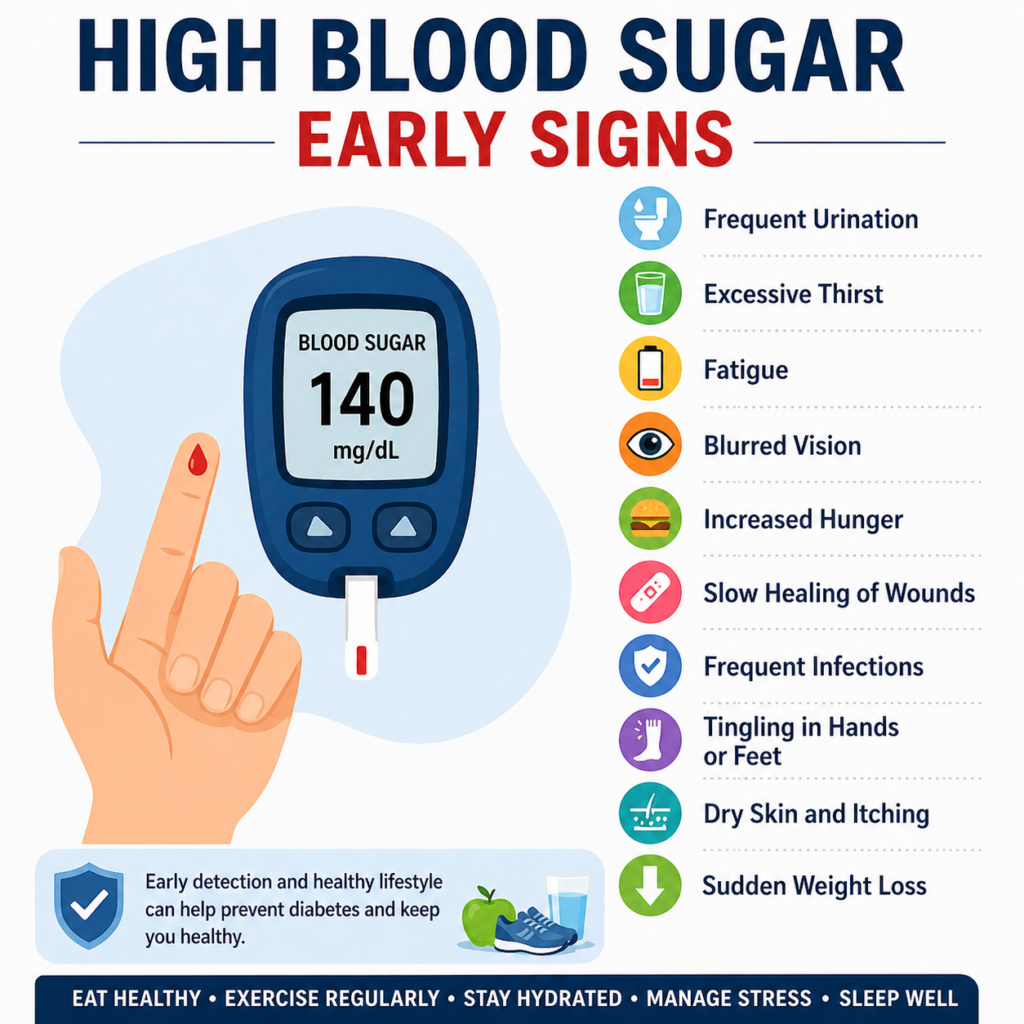
10 Early Signs of High Blood Sugar
1. Frequent Urination
If you find yourself going to the washroom more often than usual, especially at night, it could be a sign. Your body tries to remove excess sugar through urine.
2. Excessive Thirst
Frequent urination leads to dehydration, making you feel constantly thirsty, even after drinking water.
3. Constant Fatigue
When sugar cannot enter your cells, your body lacks energy. This results in tiredness and weakness.
4. Blurred Vision
High sugar levels can affect the lenses of your eyes, causing temporary vision problems.
5. Increased Hunger
Even after eating, you may feel hungry because your body isn’t properly using glucose for energy.
6. Slow Healing of Wounds
Cuts and wounds may take longer to heal due to poor blood circulation and high sugar levels.
7. Frequent Infections
High blood sugar weakens your immune system, making you more prone to infections.
8. Tingling in Hands and Feet
You may feel numbness or a slight tingling sensation due to nerve impact.
9. Dry Skin and Itching
Dehydration and poor circulation can lead to dry, itchy skin.
10. Sudden Weight Loss
Unexpected weight loss can occur when your body starts breaking down fat and muscle for energy.
What Causes High Blood Sugar?
Several lifestyle factors contribute:
- Eating too much sugar and refined carbs
- Lack of exercise
- High stress levels
- Poor sleep
- Being overweight
These factors gradually affect insulin function.
How to Control Blood Sugar Naturally
1. Improve Your Diet
Focus on:
- Whole grains
- Vegetables
- Protein-rich foods
Avoid:
- Sugary drinks
- Junk food
- Excess sweets
2. Exercise Daily
Even 30 minutes of walking can significantly improve blood sugar control.
3. Stay Hydrated
Water helps flush excess sugar from your body.
4. Manage Stress
Stress increases sugar levels. Try:
- Deep breathing
- Meditation
- Light physical activity
5. Sleep Properly
Lack of sleep affects insulin sensitivity.
Aim for:
- 7–8 hours daily
When Should You Get Tested?
If you notice multiple symptoms, it’s better to get tested.
Common tests:
- Fasting blood sugar
- Post-meal sugar test
- HbA1c
Early detection can prevent serious complications.
Simple Daily Routine for Better Blood Sugar Control
Morning:
- Warm water + light walk
Breakfast:
- High-protein meal
Lunch:
- Balanced diet (roti, sabzi, dal)
Evening:
- Avoid sugary snacks
Night:
- Light dinner + early sleep
Final Thoughts
High blood sugar doesn’t appear suddenly—it builds slowly over time. The early signs are your body’s way of warning you.
Ignoring these symptoms can lead to serious health issues, but taking small steps today can protect your future.
Focus on simple habits—healthy eating, regular exercise, good sleep—and you’ll be able to manage your blood sugar effectively.
Disclaimer:
This content is for informational purposes only and should not be considered medical advice. Consult a healthcare professional for proper diagnosis and treatment if you suspect high blood sugar or any related condition.