
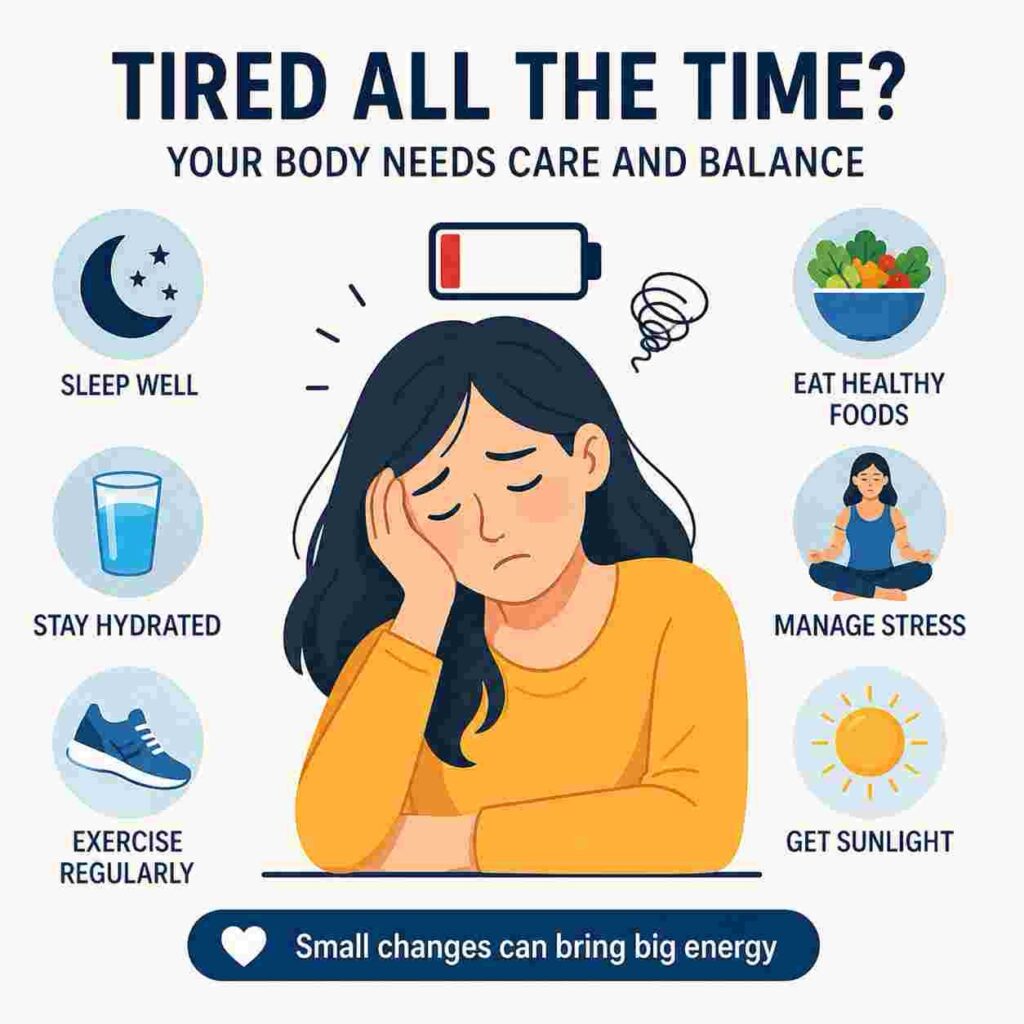
Feeling tired all the time has become a common complaint. Many people wake up feeling low on energy, struggle to stay focused during the day, and feel drained even without doing much physical work.
Most assume it’s just due to a busy schedule, but constant fatigue is usually a sign that something deeper is going on in your body.
The good part is that once you understand the real causes, fixing it becomes much easier.
What Is Constant Fatigue?
Fatigue is more than just feeling sleepy. It’s a state where your body lacks energy, both physically and mentally.
You may notice:
- Difficulty concentrating
- Lack of motivation
- Weakness
- Feeling exhausted even after rest
If this continues for days or weeks, it needs attention.
8 Hidden Causes of Constant Fatigue
1. Poor Sleep Quality
You might be sleeping 7–8 hours but still feel tired. That’s because quality matters more than quantity.
Reasons for poor sleep:
- Late-night screen usage
- Irregular sleep schedule
- Stress
2. Dehydration
Even mild dehydration can make you feel tired and dizzy.
Many people don’t drink enough water throughout the day, especially during work hours.
3. Nutrient Deficiencies
Low levels of key nutrients can drain your energy.
Common deficiencies:
- Iron
- Vitamin B12
- Vitamin D
4. High Stress Levels
Stress doesn’t just affect your mind—it drains your body too.
When you’re stressed, your body stays in a constant “alert mode,” which consumes energy.
5. Lack of Physical Activity
It may sound strange, but not moving enough can make you feel more tired.
Regular movement improves blood circulation and boosts energy.
6. Excess Sugar Intake
Sugary foods give quick energy but lead to sudden crashes, making you feel even more tired later.
7. Too Much Caffeine
While coffee can boost energy temporarily, too much caffeine disrupts sleep and increases fatigue over time.
8. Underlying Health Conditions
Sometimes fatigue is linked to conditions like:
- Thyroid imbalance
- Diabetes
- Anemia
If fatigue is severe or long-lasting, it’s important to check with a doctor.
Simple Ways to Boost Your Energy Naturally
1. Fix Your Sleep Routine
- Sleep at the same time daily
- Avoid phone 30 minutes before bed
- Keep your room dark and quiet
2. Drink Enough Water
Aim for:
- 2–3 liters daily
Start your day with a glass of warm water.
3. Improve Your Diet
Include:
- Protein (eggs, paneer, dal)
- Fruits and vegetables
- Whole grains
Avoid:
- Processed food
- Excess sugar
4. Get Sunlight Daily
Morning sunlight helps regulate your body clock and improves energy levels.
5. Move Your Body
You don’t need a heavy workout.
Simple options:
- 20–30 minutes walking
- Light stretching
6. Reduce Stress
Try:
- Deep breathing
- Meditation
- Taking short breaks
7. Limit Caffeine
Keep it to:
- 1–2 cups per day
- Avoid after evening
A Simple Daily Routine for More Energy
Morning:
- Wake up early
- Drink water
- Get sunlight
Afternoon:
- Eat balanced meals
- Stay hydrated
Evening:
- Light activity or walk
Night:
- Early dinner
- No screens before sleep
When Should You Be Concerned?
If you experience:
- Fatigue for more than 2–3 weeks
- Severe weakness
- Dizziness
- Unexplained weight changes
It’s better to consult a doctor and get basic tests done.
Thoughts
Feeling tired all the time is not normal—it’s your body asking for attention.
Instead of ignoring it or depending on caffeine, focus on simple lifestyle changes. Small improvements in sleep, diet, hydration, and activity can make a big difference.
Your energy levels directly affect your productivity, mood, and overall health. Take care of your body, and it will take care of you.
Disclaimer:
This content is for informational purposes only and should not be considered medical advice. Consult a healthcare professional if fatigue persists or worsens.