
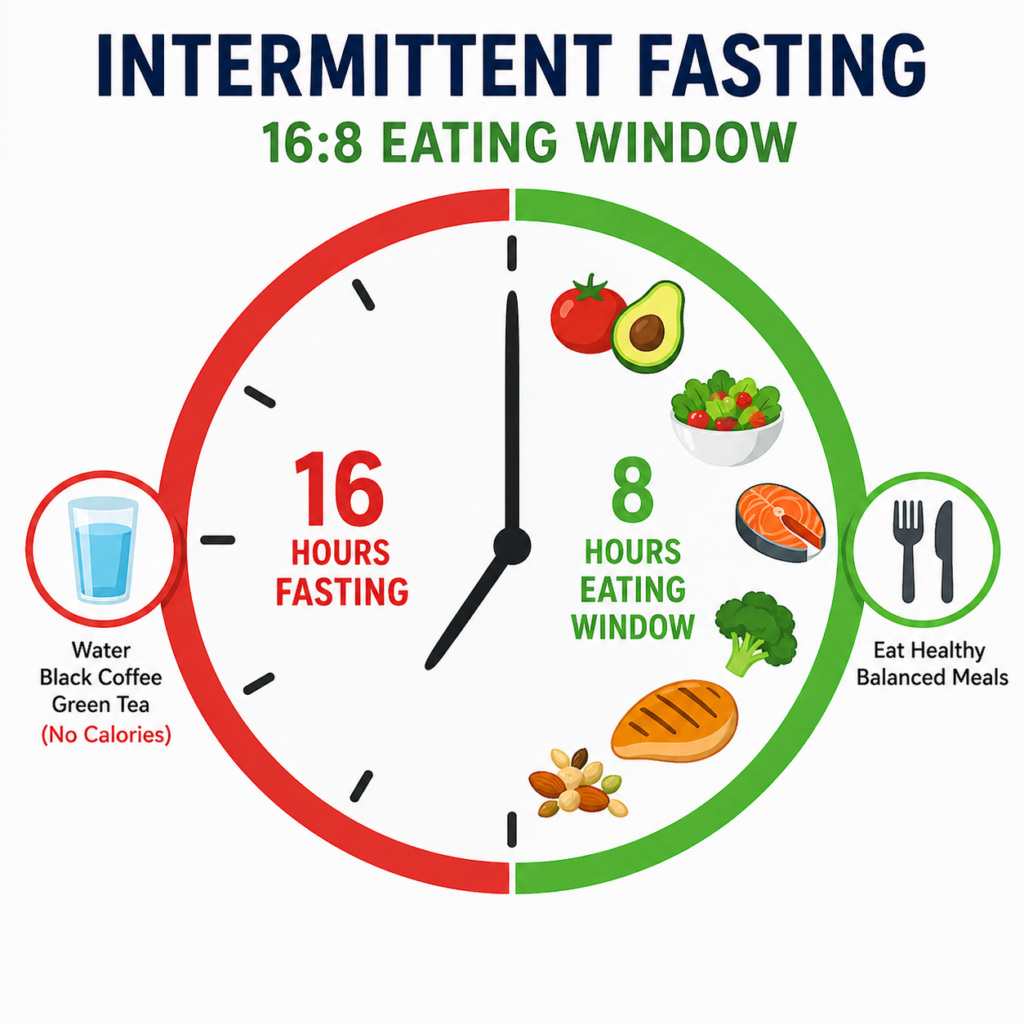
Intermittent fasting eating window concept
Intermittent fasting has quickly become one of the most popular health trends worldwide. From fitness enthusiasts to working professionals, many people are trying it to lose weight, improve metabolism, and boost overall health.
But despite all the hype, intermittent fasting is often misunderstood. Some people think it means starving yourself, while others follow it incorrectly and see no results. The truth lies somewhere in between.
If done properly, intermittent fasting can be a simple and effective way to improve your health without following complicated diets.
Let’s understand it step by step.
What Is Intermittent Fasting?
Intermittent fasting (IF) is not about what you eat, but when you eat. It involves cycling between periods of eating and fasting.
Instead of eating throughout the day, you restrict your eating to a specific time window.
For example:
- Eat between 12 PM to 8 PM
- Fast from 8 PM to 12 PM next day
This is known as the 16:8 method, one of the most common fasting styles.
Why Is Intermittent Fasting So Popular?
Because it is:
- Simple to follow
- No need to count calories strictly
- Flexible for most lifestyles
- Scientifically linked to multiple health benefits
Unlike strict diet plans, IF focuses on timing rather than food restrictions.
How Does Intermittent Fasting Work?
When you eat, your body uses glucose (sugar) for energy. When you stop eating for several hours, your body runs out of glucose and starts burning stored fat.
This process is called fat burning mode.
At the same time, your insulin levels drop, which helps your body use fat more efficiently.
Top Benefits of Intermittent Fasting
1. Helps in Weight Loss
By reducing eating hours, you naturally consume fewer calories. Also, your body starts using stored fat for energy.
2. Improves Metabolism
Fasting can improve insulin sensitivity, which helps control blood sugar levels.
3. Boosts Brain Health
Some studies suggest fasting may support brain function and reduce mental fog.
4. Supports Heart Health
It may help reduce cholesterol levels and improve blood pressure.
5. Simplifies Your Routine
No need for multiple meals or constant snacking.
Common Types of Intermittent Fasting
1. 16:8 Method (Most Popular)
- Fast for 16 hours
- Eat within 8 hours
Example:
Eat from 12 PM to 8 PM
2. 14:10 Method (Beginner Friendly)
- Fast for 14 hours
- Eat within 10 hours
Good starting point for beginners.
3. 5:2 Method
- Eat normally 5 days
- Reduce calories (500–600) on 2 days
What Can You Eat During Fasting?
During fasting:
- Water ✅
- Black coffee (no sugar) ✅
- Green tea ✅
Avoid:
- Juice
- Milk tea
- Any calories
What Should You Eat During Eating Window?
Focus on balanced nutrition:
- Protein: eggs, chicken, paneer
- Healthy fats: nuts, seeds
- Fiber: fruits, vegetables
- Carbs: rice, roti (in moderation)
Avoid overeating junk food—it cancels the benefits.
Side Effects of Intermittent Fasting
Especially in the beginning:
- Hunger
- Headache
- Low energy
- Irritability
These usually go away within a few days as your body adjusts.
Who Should Avoid Intermittent Fasting?
Not suitable for:
- Pregnant or breastfeeding women
- People with diabetes (without doctor advice)
- Underweight individuals
- People with medical conditions
Beginner-Friendly Plan (Simple and Practical)
If you’re starting:
Week 1:
- Try 12-hour fasting
- Example: 8 PM to 8 AM
Week 2:
- Move to 14-hour fasting
Week 3:
- Try 16:8 method
Simple Daily Routine Example
Morning (Fasting):
- Water + black coffee
Lunch (12 PM):
- Roti, sabzi, protein
Evening Snack:
- Fruits or nuts
Dinner (7–8 PM):
- Light meal
Common Mistakes to Avoid
- Overeating during eating window
- Eating too much junk food
- Not drinking enough water
- Starting too aggressively
How Long Before You See Results?
- Initial changes: 1–2 weeks
- Visible fat loss: 3–4 weeks
- Long-term benefits: consistent practice
Final Thoughts
Intermittent fasting is not magic, but it is powerful when done correctly. It works best when combined with a balanced diet and healthy lifestyle.
Start slow, listen to your body, and stay consistent. Over time, it can help you not only lose weight but also improve your overall health.
Disclaimer:
This content is for informational purposes only and should not be considered medical advice. Consult a healthcare professional before starting intermittent fasting, especially if you have any existing health conditions.