
“May I come in, sir?”
A tall, serious-looking man stood respectfully at the doorway and asked this simple question. Sitting inside the office was one of India’s most respected theatre personalities, Ibrahim Alkazi. He looked up from his reading, examined the visitor carefully from head to toe, and replied, “Yes, come in.”
That visitor was Amrish Puri.
At the time, nobody could have predicted that this newcomer would one day become one of the most recognizable faces in Indian cinema. Decades later, audiences across India and the world would know him as Mogambo, Baldev Singh, Ashraf Ali, and countless other unforgettable characters. Yet when he entered that room, he was not a film star, not even a professional actor.
He was simply a government employee searching for a path into theatre.
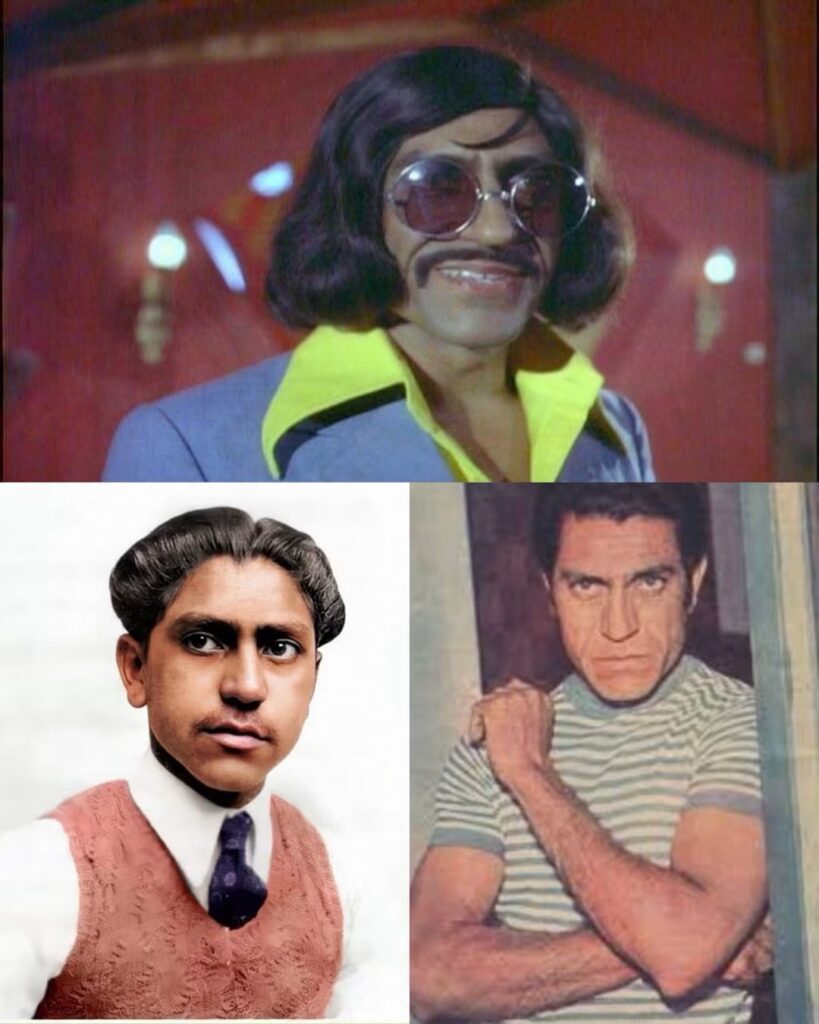
Today, on the birth anniversary of the legendary Amrish Puri, it is worth remembering the incredible journey that transformed an ordinary salaried man into one of Bollywood’s greatest actors.
Born on June 22, 1932, in Nawanshahr, Punjab, Amrish Puri grew up in a family that valued education and discipline. His father worked in government service, which meant the family moved frequently. During his childhood, they spent time in Delhi before eventually settling in Shimla after his father’s retirement.
Amrish completed much of his schooling in Shimla. After finishing his education, he began thinking seriously about his future. Unlike many aspiring actors who move to Mumbai with dreams of instant stardom, Amrish was practical. He wanted stability before pursuing his artistic ambitions.
By the early 1950s, his elder brothers Madan Puri and Chaman Puri had already established themselves in the film industry. Seeing their success naturally attracted Amrish toward cinema. However, his brothers offered valuable advice.
Instead of rushing into films unprepared, they encouraged him to first develop his skills and build a secure foundation. Amrish listened carefully. It was advice that would shape the rest of his life.
In 1954, he joined the State Insurance Department and began working a regular government job. What was expected to be a temporary arrangement eventually lasted twenty-one years.
Many people would have given up their artistic dreams after settling into a stable career. Amrish Puri did not.
While working during the day, he continued searching for opportunities to learn acting.
His first attempt was to join Prithvi Theatre, founded by the legendary Prithviraj Kapoor. He even spoke with Kapoor about joining the theatre group. Kapoor welcomed him and encouraged him to participate.
However, Amrish felt the organization was crowded with aspiring performers. He worried that he might not receive enough opportunities to learn and grow. As a result, he chose a different path.
Years later, fate introduced him to the opportunity that would change everything.
One of his colleagues at the insurance department happened to be connected to the theatre world. Knowing Amrish’s interest in acting, the colleague took him to the National Theatre Training Centre run by Ibrahim Alkazi.
That visit became a turning point.
When Amrish expressed his desire to learn theatre, Alkazi immediately handed him a script of Arthur Miller’s celebrated play A View from the Bridge.
The assignment was simple but demanding.
Read the play.
Study the central character Eddie Carbone.
Understand the role.
Return and demonstrate what you have learned.
Amrish accepted the challenge.
Within days, he became actively involved in theatre training. Voice modulation, body language, character analysis, stage movement, emotional expression, and script interpretation became part of his daily life.
He approached acting with the same seriousness that he brought to his government job.
The results were extraordinary.
When he completed the one-year course under Ibrahim Alkazi, he graduated at the top of his class. His performance was so impressive that he received formal recognition for securing first place.
For a man who had entered theatre relatively late, it was a significant achievement.
Soon afterward, renowned theatre director Satyadev Dubey cast him in the iconic play Andha Yug.
Interestingly, Amrish initially underestimated Dubey because Dubey was younger than him. He wondered how someone younger could direct a major theatrical production.
Those doubts disappeared quickly.
As rehearsals progressed, Amrish realized why Dubey was already regarded as a visionary. Working under his direction became another important stage in Amrish’s development as an actor.
Andha Yug was staged in November 1962 on the terrace of Ibrahim Alkazi’s residence. Around fifteen performances were held, and the production became one of the most celebrated events in modern Indian theatre.
For Amrish Puri, it marked the beginning of a serious commitment to the stage.
Over the next decade, he immersed himself completely in theatre.
He performed in productions such as Ashadh Ka Ek Din, Inquilab, Tota Maina, and many others. He also directed plays, including Woh Saari Raat.
During this period, he became known among theatre circles as a disciplined, hardworking, and exceptionally talented performer.
Unlike many actors chasing quick success in films, Amrish spent years refining his craft.
This dedication would later become his greatest strength.
Many people believe that Dev Anand’s Prem Pujari was Amrish Puri’s first film. However, Amrish himself clarified that his actual film debut was Sunil Dutt’s Reshma Aur Shera in 1971.
The role was small, but it represented an important milestone.
After nearly ten years of theatre work and seventeen years of government service, he had finally entered the film industry.
Yet success did not arrive immediately.
For several years, he continued balancing acting opportunities with his regular employment. Financial responsibilities prevented him from taking major risks.
In fact, Amrish Puri continued working in the insurance department until 1975.
Think about that for a moment.
The man who would later dominate movie screens across India spent twenty-one years working a government job before committing fully to acting.
Most aspiring actors would find such patience impossible.
But Amrish understood something important: great careers are built gradually.
When he finally resigned from his job, he did so with confidence because years of theatre had prepared him for the challenges ahead.
Throughout the late 1970s and early 1980s, filmmakers began noticing his extraordinary screen presence.
His deep voice, towering personality, expressive eyes, and commanding performances made him impossible to ignore.
Soon he became one of the most sought-after character actors in Hindi cinema.
What truly separated Amrish Puri from many of his contemporaries was his ability to make every role memorable.
Whether playing a king, police officer, businessman, politician, father, or villain, he brought authenticity and conviction to the character.
Then came the role that would make him immortal.
In 1987, director Shekhar Kapur cast him as Mogambo in Mr. India.
The character became a cultural phenomenon.
His famous dialogue, “Mogambo Khush Hua,” entered everyday language and remains one of the most iconic lines in Indian cinema history.
Even decades later, audiences instantly associate the phrase with Amrish Puri.
Yet reducing his legacy to Mogambo alone would be unfair.
He delivered powerful performances in films such as Meri Jung, Ghayal, Damini, Karan Arjun, Koyla, Virasat, Gardish, Nayak, Dilwale Dulhania Le Jayenge, and many more.
In Dilwale Dulhania Le Jayenge, he played Baldev Singh, a strict but ultimately loving father. The performance proved that he could move audiences emotionally just as effectively as he could terrify them.
This versatility made him one of the finest actors Indian cinema has ever produced.
His colleagues frequently praised his professionalism.
He arrived on time.
He knew his lines.
He respected directors.
He treated acting as a craft rather than a celebrity lifestyle.
These habits had been developed during years of disciplined work in theatre and government service.
Even after achieving tremendous success, Amrish remained humble.
He never forgot the struggles that shaped him.
He often spoke about the importance of patience, preparation, and continuous learning.
His journey demonstrates that success does not always come early.
Sometimes it arrives after decades of effort.
Sometimes the people who achieve the greatest things are the ones willing to work quietly while others seek instant recognition.
Amrish Puri’s life is a powerful example of that truth.
From a young man in Shimla dreaming about cinema, to a government employee spending twenty-one years behind a desk, to a theatre student learning under Ibrahim Alkazi, to one of Bollywood’s greatest performers, his story remains deeply inspiring.
Today, generations of actors continue to study his performances.
Film lovers continue to quote his dialogues.
Directors continue to admire his professionalism.
And audiences continue to remember him with affection and respect.
On his birth anniversary, we salute a man whose talent, discipline, and dedication transformed him into a true legend of Indian cinema.
Amrish Puri may no longer be with us, but his performances ensure that he will never be forgotten.
Few actors leave behind a legacy that feels timeless.
Amrish Puri was one of them.
Kissa TV remembers and salutes the legendary Amrish Puri with immense respect.
Mogambo may have been happy, but Indian cinema was truly fortunate to have Amrish Puri.
Disclaimer:
This article is based on information gathered from publicly available interviews, published reports, biographies, memoirs, media coverage, and historical references related to Amrish Puri’s life and career. The purpose of this article is solely educational, informational, and entertainment-oriented.
While every effort has been made to present accurate information, some details may vary across sources, interviews, or personal recollections. Readers are encouraged to refer to official biographies, archival interviews, and verified publications for further research.
The opinions, statements, and anecdotes mentioned in quoted interviews belong to the individuals who originally expressed them and do not necessarily reflect the views of Kissa TV or the author.
All trademarks, film titles, character names, and personalities mentioned in this article remain the property of their respective owners. This article is intended as a tribute to the life, achievements, and legacy of legendary actor Amrish Puri and is not intended to defame, misrepresent, or infringe upon the rights of any individual, organization, or entity.
If any factual inaccuracies are identified, readers are welcome to share verified corrections for review and update.