
The Hidden Dangers of Sitting Too Much: How a Sedentary Lifestyle Affects Your Health
In today’s world, sitting has become an unavoidable part of life. Many people spend hours sitting at a desk, driving a car, watching television, or scrolling through their phones. While it may seem harmless, spending too much time sitting can have serious consequences for your health.
Most people associate health problems with poor diet or lack of exercise, but research increasingly shows that prolonged sitting itself can negatively impact the body. Even individuals who exercise regularly may face health risks if they spend most of their day seated.
The good news is that understanding these risks can help you make simple changes that improve your health and quality of life.
Why Are We Sitting More Than Ever?
Modern technology has transformed how we work and live. Many jobs that once required physical activity are now performed from a computer.
Consider a typical day:
- Sitting during breakfast
- Driving to work
- Sitting at a desk for eight hours
- Driving home
- Watching television or using a smartphone
It’s not uncommon for adults to spend 8 to 12 hours sitting every day.
Unfortunately, the human body was not designed for such prolonged inactivity.
What Happens to Your Body When You Sit Too Long?
When you sit for extended periods, your muscles become less active. Your body burns fewer calories, circulation slows down, and important metabolic processes become less efficient.
Over time, these changes can contribute to various health issues.
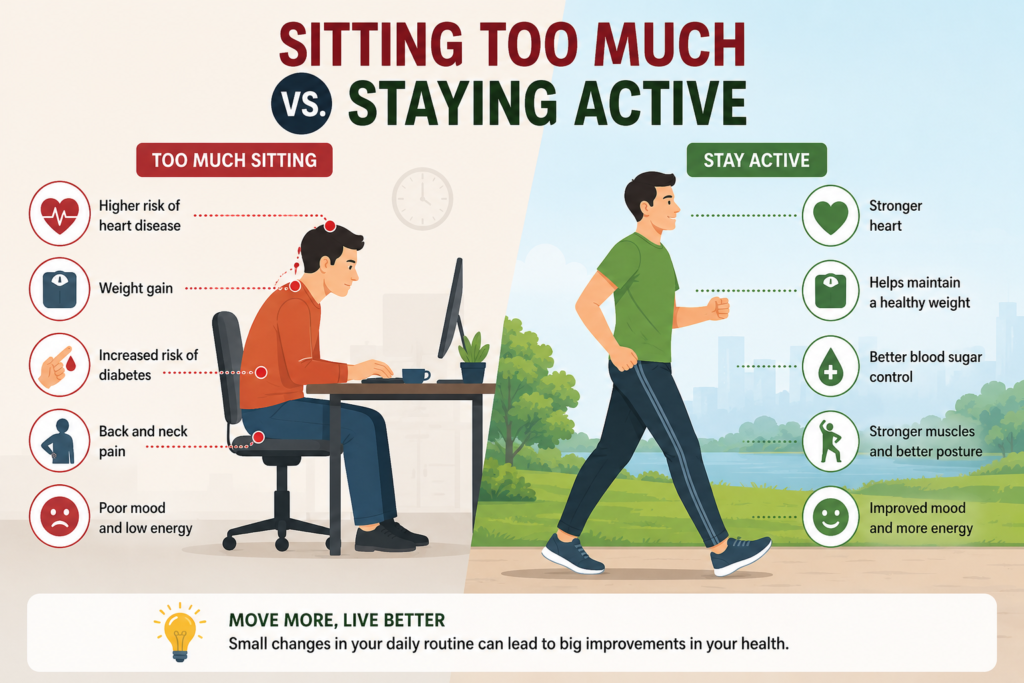
1. Increased Risk of Weight Gain
One of the most noticeable effects of excessive sitting is weight gain.
Physical movement helps burn calories. When you sit for hours, your energy expenditure drops significantly. If calorie intake remains the same while calorie burning decreases, weight gain often follows.
Many people unknowingly consume more calories than they burn because of their sedentary lifestyle.
2. Higher Risk of Heart Disease
Your heart benefits from regular movement. Physical activity helps maintain healthy blood circulation and supports cardiovascular health.
Prolonged sitting may contribute to:
- Higher blood pressure
- Increased cholesterol levels
- Poor circulation
These factors can increase the risk of heart disease over time.
3. Blood Sugar Problems
Your muscles help regulate blood sugar by using glucose for energy. When you remain inactive for long periods, your body’s ability to manage blood sugar can become less effective.
This may lead to:
- Insulin resistance
- Elevated blood sugar levels
- Increased risk of Type 2 Diabetes
Breaking up long sitting periods with short walks can help improve blood sugar control.
4. Back and Neck Pain
Many office workers are familiar with back pain, neck stiffness, and shoulder discomfort.
Poor posture while sitting places additional stress on:
- The spine
- Neck muscles
- Lower back
- Shoulders
Hours spent looking at screens can further worsen these issues.
Proper ergonomics and regular stretching can significantly reduce discomfort.
5. Reduced Muscle Strength
The muscles in your legs and core play an important role in maintaining balance and stability.
When these muscles remain inactive for extended periods, they gradually weaken.
Weak muscles can increase the likelihood of:
- Poor posture
- Reduced mobility
- Greater risk of injury
Regular movement helps maintain strength and flexibility.
6. Poor Mental Health
Physical activity and mental health are closely connected.
People who spend most of their day sitting may experience:
- Increased stress
- Lower mood
- Reduced energy levels
- Difficulty concentrating
Movement stimulates the release of chemicals in the brain that help improve mood and reduce stress.
Even a short walk can have a positive effect on mental well-being.
7. Increased Risk of Certain Chronic Diseases
Research suggests that prolonged inactivity may be linked to an increased risk of several chronic conditions.
These include:
- Type 2 Diabetes
- Heart disease
- Obesity
- Metabolic syndrome
Although sitting itself is not the sole cause, it contributes significantly when combined with poor lifestyle habits.
Signs That You May Be Sitting Too Much
Many people don’t realize how much time they spend sitting until they begin experiencing symptoms.
Common signs include:
- Frequent back pain
- Tight hips
- Neck stiffness
- Low energy levels
- Weight gain
- Poor posture
- Fatigue despite adequate sleep
If these symptoms sound familiar, your daily activity level may need improvement.
How Much Sitting Is Too Much?
There is no exact number that applies to everyone. However, many health experts recommend minimizing uninterrupted sitting whenever possible.
A useful rule is:
Avoid sitting continuously for more than 30 to 60 minutes.
Even standing up briefly can help improve circulation and reduce some of the negative effects of prolonged sitting.
Simple Ways to Reduce Sitting Time
The good news is that you don’t need a gym membership or intense workouts to improve your situation.
Small changes throughout the day can make a meaningful difference.
1. Stand Up Every Hour
Set a reminder on your phone or computer.
Every hour:
- Stand up
- Stretch
- Walk around for a few minutes
These short breaks help improve circulation and reduce muscle stiffness.
2. Take Walking Breaks
Instead of checking your phone during breaks, use that time for a quick walk.
Even five minutes of walking several times per day can add up significantly.
3. Use the Stairs
Whenever possible:
- Choose stairs over elevators
- Park farther away
- Walk short distances instead of driving
These small decisions increase daily movement.
4. Improve Your Workspace
If possible, consider:
- A standing desk
- Adjustable workstation
- Ergonomic chair
A comfortable setup can reduce strain on your body.
5. Exercise Regularly
Regular exercise remains one of the best ways to counteract the effects of sitting.
Good options include:
- Walking
- Cycling
- Swimming
- Strength training
- Yoga
Aim for at least 150 minutes of moderate activity each week.
6. Stretch Daily
Stretching helps:
- Improve flexibility
- Reduce stiffness
- Support posture
Focus on:
- Neck
- Shoulders
- Back
- Hips
- Legs
Even ten minutes daily can make a noticeable difference.
A Simple Daily Activity Plan
If you have a desk job, try this routine:
Morning
- 10-minute walk
- Light stretching
Work Hours
- Stand every hour
- Walk during lunch break
- Take phone calls while standing
Evening
- 30-minute walk or workout
- Stretch before bed
These simple habits can significantly increase your daily activity level.
The Long-Term Benefits of Moving More
Reducing sitting time can provide numerous benefits:
- Better energy levels
- Improved posture
- Healthier weight
- Stronger muscles
- Better heart health
- Improved mood
- Reduced risk of chronic disease
The benefits often become noticeable within a few weeks of making consistent changes.
Final Thoughts
Sitting may seem harmless, but spending too much time seated can quietly affect your health over the years. From weight gain and back pain to heart disease and diabetes risk, the effects of a sedentary lifestyle are significant.
Fortunately, the solution does not require drastic changes. Standing more often, taking short walks, exercising regularly, and staying mindful of your daily movement can have a powerful impact on your long-term health.
Remember, your body is designed to move. The more opportunities you give it to do so, the better it will serve you for years to come.
Disclaimer
This article is for informational and educational purposes only. It is not intended to replace professional medical advice, diagnosis, or treatment. Always consult a qualified healthcare professional regarding any health concerns or before making significant lifestyle changes.