
Hair is often seen as a reflection of overall health, confidence, and personal care. However, modern lifestyles have made hair problems increasingly common across all age groups. From excessive hair fall and thinning to dandruff, frizz, and scalp irritation, these issues can affect both appearance and self-esteem.
The good news is that most hair problems are manageable and preventable once their underlying causes are understood. This blog explores common hair concerns, why they occur, and practical solutions that can genuinely improve hair health over time.
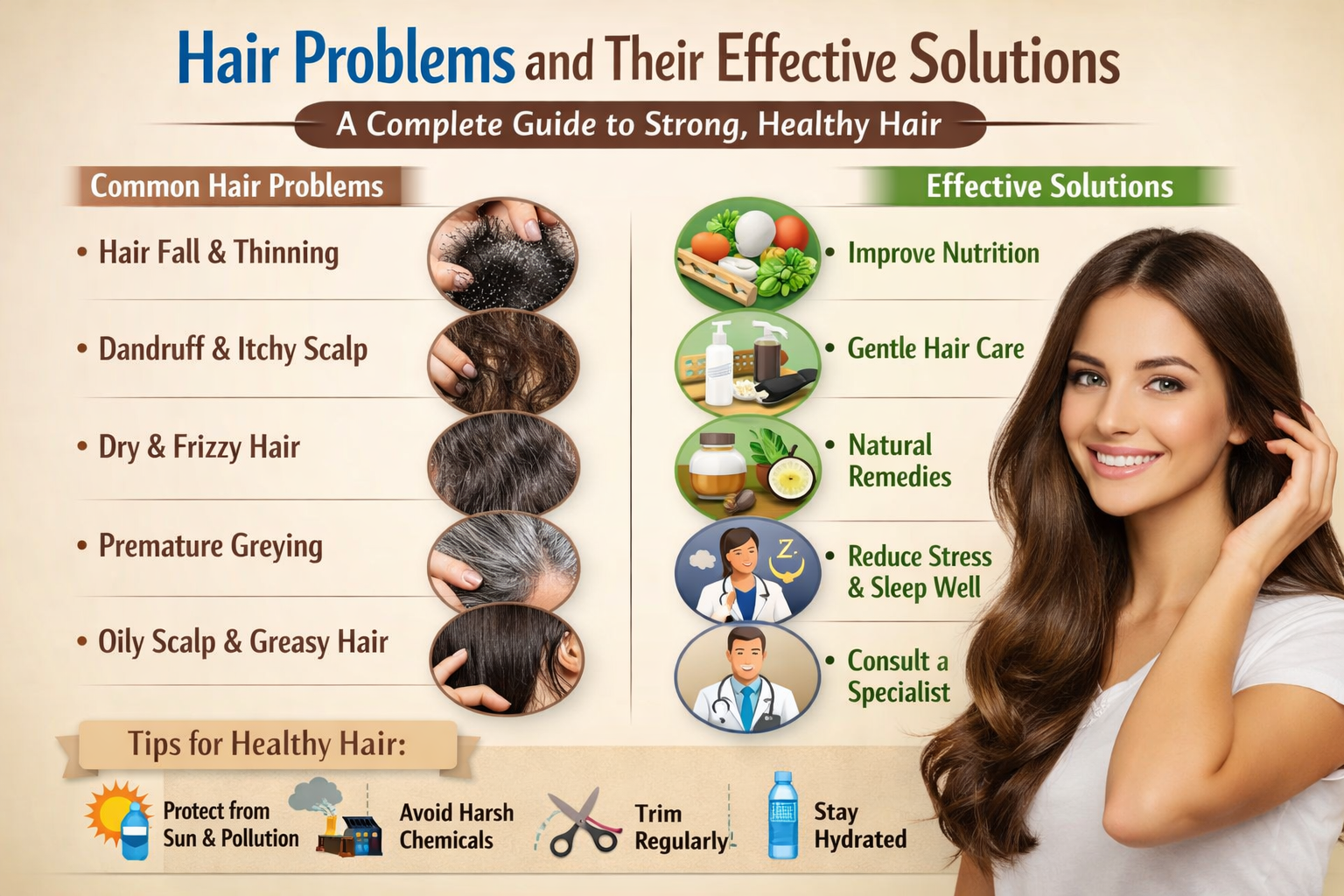
Common Hair Problems and Their Causes
1. Hair Fall and Hair Thinning
Hair fall is one of the most widespread concerns today. Losing 50–100 strands daily is normal, but anything beyond that may indicate a problem.
Common causes include:
Nutritional deficiencies (iron, protein, biotin) Stress and poor sleep Hormonal imbalance Excessive heat styling and chemical treatments Genetic predisposition Post-illness or post-pregnancy hair loss
2. Dandruff and Scalp Flaking
Dandruff appears as white or yellow flakes on the scalp and shoulders and is often accompanied by itching.
Possible causes:
Dry scalp Excess oil production Fungal growth Infrequent shampooing Sensitivity to hair products
3. Dry, Frizzy, and Damaged Hair
Dry hair lacks moisture, resulting in rough texture, split ends, and breakage.
Main reasons include:
Overwashing Excessive use of hair dryers and straighteners Sun exposure Chemical treatments like coloring or rebonding Lack of natural oils
4. Premature Greying
Greys appearing early can be emotionally distressing, especially for young adults.
Common triggers:
Genetic factors Vitamin B12 deficiency Smoking Oxidative stress Chronic stress
5. Oily Scalp and Greasy Hair
An oily scalp can make hair look flat and dirty within hours of washing.
Causes include:
Overactive sebaceous glands Hormonal changes Overwashing hair Using heavy or unsuitable hair products
Effective Solutions for Healthy Hair
1. Improve Nutrition for Hair Growth
Hair health begins from within. A balanced diet plays a critical role in strengthening hair follicles.
Include in your diet:
Protein-rich foods (eggs, lentils, nuts) Iron sources (spinach, dates, legumes) Omega-3 fatty acids (flaxseeds, walnuts) Fresh fruits and vegetables Adequate water intake
2. Adopt a Gentle Hair Care Routine
Use a mild, sulfate-free shampoo Avoid washing hair daily unless required Condition regularly, focusing on hair lengths Detangle wet hair gently with a wide-tooth comb Minimize heat styling
3. Natural Home Remedies
For hair fall:
Warm oil massage using coconut or castor oil Aloe vera gel application on scalp
For dandruff:
Tea tree oil mixed with carrier oil Yogurt and lemon scalp mask
For dry hair:
Banana and honey hair mask Deep conditioning with natural oils
Consistency is key—results appear gradually.
4. Manage Stress and Sleep Patterns
Stress directly impacts hair growth cycles. Regular exercise, meditation, proper sleep, and relaxation techniques can significantly reduce hair fall caused by stress.
5. Avoid Harsh Chemical Treatments
Repeated coloring, perming, or straightening weakens hair structure. If treatments are necessary, space them out and follow with deep conditioning and repair treatments.
6. Seek Professional Help When Needed
If hair loss is excessive, patchy, or persistent despite lifestyle changes, consulting a dermatologist or hair specialist is recommended. Medical treatments, supplements, or targeted therapies may be required based on diagnosis.
Long-Term Hair Care Tips
Protect hair from sun and pollution Avoid tight hairstyles that pull hair roots Change pillowcases regularly Trim split ends every 6–8 weeks Stay consistent with your routine
Conclusion
Hair problems are common, but they are not permanent. Understanding the root cause, making informed lifestyle changes, and following a consistent hair care routine can significantly improve hair quality over time. Healthy hair is not achieved overnight, but with patience and proper care, strong and beautiful hair is absolutely achievable.
Disclaimer
The information provided in this article is for educational and general informational purposes only and should not be considered medical advice. Individual hair and scalp conditions may vary. Always consult a qualified healthcare professional or dermatologist before starting any new treatment, supplement, or remedy for hair-related concerns.