
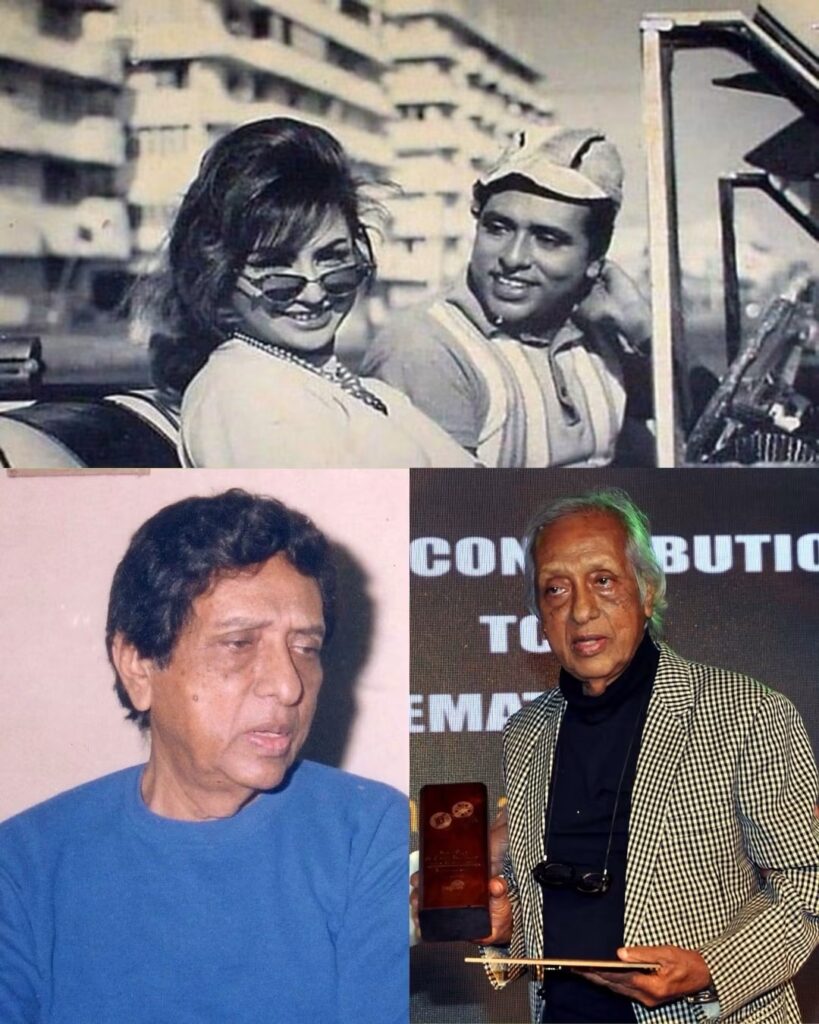
The history of Indian cinema is filled with inspiring stories of struggle, perseverance, and success. Yet few journeys are as remarkable as that of veteran actor Chandrashekhar, a man who experienced poverty, child marriage, family responsibilities, and years of hardship before eventually becoming a respected name in Bollywood.
For modern audiences, it is difficult to imagine a life where a boy is married at the age of thirteen, forced to abandon education because of financial hardship, works as a watchman to survive, sleeps on footpaths, and then goes on to become a successful film actor and producer. Yet this was the reality of Chandrashekhar’s life.
His story is not merely the tale of an actor. It is the story of resilience, determination, and an unwavering belief in oneself.
A Childhood Marked by Loss
Chandrashekhar was born on July 7, 1922, in Hyderabad. His early life was far from easy.
He belonged to a family of three siblings—two brothers and one sister. Tragedy struck early when his mother passed away while the children were still young. The loss deeply affected the family and changed the course of their lives.
His father was a doctor working in a government hospital. Despite holding a respectable profession, family circumstances became increasingly complicated after his mother’s death.
Years later, Chandrashekhar revealed a shocking detail about his childhood in an interview. He said that his father arranged his marriage when he was only thirteen years old. According to him, the reason was that his father wished to remarry.
Even more surprising was the fact that his new stepmother was younger than Chandrashekhar himself. In time, she would have six children with his father, further expanding the family.
It was an unusual and difficult beginning to life.
Forced to Leave School
Education was another casualty of the family’s financial difficulties.
Chandrashekhar was able to study only up to the seventh standard. Economic pressures became so severe that continuing school was no longer possible.
Like many young Indians of that era, he was forced to enter the workforce much earlier than he would have liked.
The dream of education had to be sacrificed for survival.
Journey to Bangalore
In 1940, seeking employment and a better future, Chandrashekhar moved to Bangalore with his grandmother.
Interestingly, his wife did not accompany him.
Her family refused to send her with him, leaving Chandrashekhar to begin his search for work alone.
Finding a respectable job proved difficult. With limited education and no professional qualifications, opportunities were scarce.
Eventually, he accepted a job as a watchman.
It was not glamorous work, but it provided an income and allowed him to support himself.
The Quit India Movement Changes Everything
Two years later, India witnessed one of the most significant movements in its freedom struggle—the Quit India Movement of 1942.
Around this period, Chandrashekhar left his watchman job and returned home.
Soon afterward, he secured employment at Ramgopal Mills, where he earned a monthly salary of ₹12.50.
Though modest, the job brought some stability.
More importantly, it introduced him to friends who would unknowingly change his life forever.
“You Look Like a Hero”
At the mill, several friends often complimented Chandrashekhar on his appearance.
They repeatedly told him that he looked like a film hero.
What started as casual comments gradually planted a dream in his mind.
The more he heard such remarks, the more he began imagining a future in films.
Eventually, he decided to take a chance.
Carrying just ₹40 in his pocket, Chandrashekhar left for Bombay—the city that represented hope for countless aspiring actors.
Struggling in Bombay
Life in Bombay was far more difficult than he had imagined.
Initially, he stayed in a crowded chawl in Colaba with a friend.
Later, after learning about his son’s situation, Chandrashekhar’s father asked a police officer friend in Bombay to help him.
The officer took Chandrashekhar into his own modest home, giving the young dreamer a place to stay.
Every day, Chandrashekhar walked from studio to studio looking for opportunities.
The problem was simple: he couldn’t even get inside.
Studio gatekeepers regularly stopped him at the entrance.
No matter how hard he tried, he remained an outsider.
A Lucky Break at Ranjit Studios
Then fate intervened.
One day, Chandrashekhar was standing outside Ranjit Studios when a man sitting in a car noticed him.
The stranger asked a simple question:
“Do you want to become a hero?”
Without hesitation, Chandrashekhar answered yes.
The man took him inside the studio, where a film shoot was underway.
It was the opportunity Chandrashekhar had been waiting for.
He was hired as an extra artist.
At the time, extra artists were divided into two categories—ordinary extras and “decent” extras.
Ordinary extras earned about ₹1.50 per day, while decent extras earned around ₹8 per day.
Within a few months, Chandrashekhar progressed to the higher category.
For a struggling newcomer, it was a significant achievement.
Sleeping on Footpaths
Success did not arrive immediately.
During his early years in Bombay, Chandrashekhar spent some nights sleeping on the footpaths near Chitra Cinema in Dadar.
The experience was frightening and uncomfortable.
He later admitted that he never felt truly safe while sleeping on the streets.
Yet these hardships only strengthened his determination.
The Shalimar Pictures Chapter
Hearing about vacancies at Shalimar Pictures in Pune, Chandrashekhar moved there with a friend.
Unfortunately, he did not get the job he wanted.
However, another opportunity emerged.
He was hired as a chorus singer.
According to Chandrashekhar, legendary playback singer Shamshad Begum had once heard his voice and recommended his name.
The job paid ₹60 per month—a major improvement over his previous earnings.
For the first time, financial stability seemed within reach.
Building a Family Life
With a regular salary, Chandrashekhar rented a house and began sending money back home.
By this point, he had become a father.
Eventually, he brought his family to Pune so they could live together.
It was a significant milestone in his personal life.
Despite all the struggles, he was finally able to provide for his loved ones.
The Prithviraj Kapoor Encounter
One of the most memorable incidents of Chandrashekhar’s career involved legendary actor Prithviraj Kapoor.
On his first day at a studio, Chandrashekhar entered a makeup room and switched on a tube light.
Film writer and future director Ramanand Sagar objected, saying extra artists were not permitted to use that facility.
The remark upset Chandrashekhar.
In response, he boldly declared:
“One day I will become a big actor, and you will come to me for work.”
Moments later, he heard applause behind him.
Turning around, he saw Prithviraj Kapoor.
The veteran actor praised his confidence and encouraged him never to lose that spirit.
The encounter left a lifelong impression on Chandrashekhar and marked the beginning of a friendship between the two men.
The Turning Point: Surang
India’s independence brought changes to the film industry as well.
Eventually, Chandrashekhar returned to Bombay and continued working.
His breakthrough came when acclaimed filmmaker V. Shantaram cast him in the film Surang.
Although Chandrashekhar played the second lead rather than the hero, audiences and critics noticed his performance.
In fact, some reviews praised him even more than the film’s lead actor.
One newspaper famously wrote:
“A new star has arrived.”
The statement proved prophetic.
Success Finally Arrives
Following the success of Surang, Chandrashekhar’s career began moving steadily upward.
He worked with many prominent directors and producers and became a recognized face in Hindi cinema.
His fees rose dramatically.
At one stage, he reportedly earned between ₹15,000 and ₹20,000 per film—an impressive amount for that era.
He purchased a convertible car and rented a comfortable home.
For someone who had once slept on footpaths, the transformation was extraordinary.
Becoming a Producer
Chandrashekhar’s ambitions extended beyond acting.
He became involved in film production and collaborated on projects including Meenar, Basant Bahar, and Barsaat Ki Raat through professional associations in the industry.
These ventures helped establish him as more than just an actor.
He became a respected industry figure with interests behind the camera as well.
Buying His Dream Home
One of the proudest moments of his life came in 1974.
Years earlier, he had rented a house in Andheri for ₹170 per month.
At that time, the area was sparsely populated and far from the bustling commercial district it would later become.
In 1974, he purchased the property for ₹60,000.
Today, that location is considered prime Mumbai real estate.
The purchase symbolized how far he had come from the days of uncertainty and struggle.
A Life Well Lived
Beyond his film career, Chandrashekhar also helped redeem his family’s mortgaged house in Hyderabad.
The achievement brought immense joy to his relatives.
He later spoke proudly about the family’s large house and school in Hyderabad.
These accomplishments reflected not just personal success but also his commitment to improving the lives of those around him.
Farewell to a Legend
On June 16, 2021, Chandrashekhar passed away at the age of 98.
His death marked the end of a remarkable chapter in Indian cinema.
Few actors have traveled such an extraordinary path—from child marriage and poverty to becoming a respected film star.
His journey reminds us that success is rarely immediate. It is built through persistence, courage, sacrifice, and belief in oneself.
Today, Chandrashekhar is remembered not only for the films he acted in but also for the inspiring life he lived.
His story remains one of Bollywood’s most remarkable tales of determination and triumph.